National Special Pathogen System (NSPS)

National Special Pathogen System Overview
The National Special Pathogen System (NSPS) helps the country prepare the health care system, protect the health care workforce, and respond to special pathogen events by coordinating special pathogen care across the United States.
The NSPS consists of a tiered System of Care, made up of health care facilities across the country, and is operationalized by the National Emerging Special Pathogens Training and Education Center (NETEC) as its Coordinating Body. Other health care and public health partners with capabilities in readiness, response, and recovery play a key role in supporting health care facilities across the country to respond to high-consequence infectious disease threats.

Mission
To develop a coordinated network of high-quality special pathogen care dedicated to protecting patients, communities, and the health care workforce in the United States.
Vision
To save lives and protect the health care workforce through an agile and comprehensive special pathogen system of care.
Aspirational Goals
after special pathogen infection
after suspected special pathogen infection
to high quality special pathogen care for all of the U.S. population


What Does the NSPS Look Like?
Level 1 facilities, or Regional Emerging Special Pathogen Treatment Centers (RESPTCs), are regional resource hubs which provide highly specialized care. Level 1s care for patients for their duration of illness.
Level 2 facilities, or Special Pathogen Treatment Centers (SPTCs), have the capacity to deliver specialized care to clusters of patients and serve as primary patient care delivery centers. Level 2 facilities can care for patients for their duration of illness.
Level 3 facilities, or Assessment Centers, are widely accessible care delivery facilities, able to conduct limited basic laboratory testing, stabilize patients, and coordinate rapid patient transfer. Level 3s can care for patients for 12-36 hours.
Level 4 facilities, or All Other Healthcare Facilities, can identify, isolate, inform, & initiate stabilizing medical care; protect staff; and arrange timely patient transport to minimize impact to normal facility operations.
Additional partners, such as EMS and public health, are essential for the coordination of the NSPS.
NSPS Level 2 Resource Guide
The NSPS Level 2 Resource Guide helps healthcare facilities understand what’s required to achieve Level 2 status and build practical, sustainable readiness for special pathogen events. Inside, you’ll find a clear overview of the NSPS and where Level 2 facilities fit in the national system.; step-by-step guidance across 11 capability domains (from physical infrastructure and PPE to training and exercises); FAQs with curated NETEC resources; checklists to assess current capabilities; and tips for partnering with your Regional Emerging Special Pathogen Treatment Center (RESPTC) and public health partners.
The NSPS Minimum Capabilities
The System of Care Workgroup has defined the minimum capabilities that should be met by healthcare facilities at each level of the NSPS. These minimum capabilities are currently being socialized within each region and to national groups and professional organizations. Review the Example of Domains Within the Minimum Capabilities.
| Capabilities | Level 1 | Level 2 | Level 3 |
|---|---|---|---|
| Care Duration | Duration of illness | Duration of illness | 12-36 hours |
| Capacity for VHF, airborne | 2 VHFs | 1-2 VHFs | 1+ isolation space |
| PPE Supply | 2 VHF cases for at least 7 days onsite (with plans to support 21 days of care) | 1-2 VHF cases for at least 7 days onsite (with plans to support 21 days of care) | 3 VHF cases for 12-36 hours (before resupply) |
| Exercises | Quarterly | At least twice annually | At least annually for mystery patient exercise |
| PPE Training | Quarterly | At least twice annually | At least annually |
| Skills Training | Quarterly | At least annually | – |
| Lab Testing Ability | Clinical lab testing | Clinical lab testing | Point-of-care onsite clinical lab testing |
System of Care Work Group
To further define and operationalize the minimum capabilities of facilities at each level of the NSPS, NETEC convened the System of Care Work Group, consisting of experienced healthcare leaders from all levels of the NSPS and from all 10 HHS Regions.


System of Care Workgroup Members
The System of Care Workgroup members represent a diverse group of institutions from across all 10 HHS Regions, some of whose logos are shown here.
Kate Hammond (R1)
Jim Paturas (R1)
Paritosh Prasad (R2)
Craig DeAtley (R3)
Christopher Sulmonte (R3)
Jimmy Gordon (R4)
Alexandra Seguin (R5)
Amy Arrington (R6)
Darren Pemberton (R7)
Elizabeth Puzniak (R7)
Dawn Lehrmann (R8)
Erika Cheung (R9)
Tiffany Van De Wal (R9)
Kenneth Miller (R10)
Darrell Ruby (R10)
Monica Hoefsmit (R10)
Ken Mitchell (R10)

Find Your Regional Contacts
Find contact information below for each of our Regional Treatment Centers, including local and state health partners; physician, nursing, and operations leadership; and pediatric contacts.
Regional Testimonials
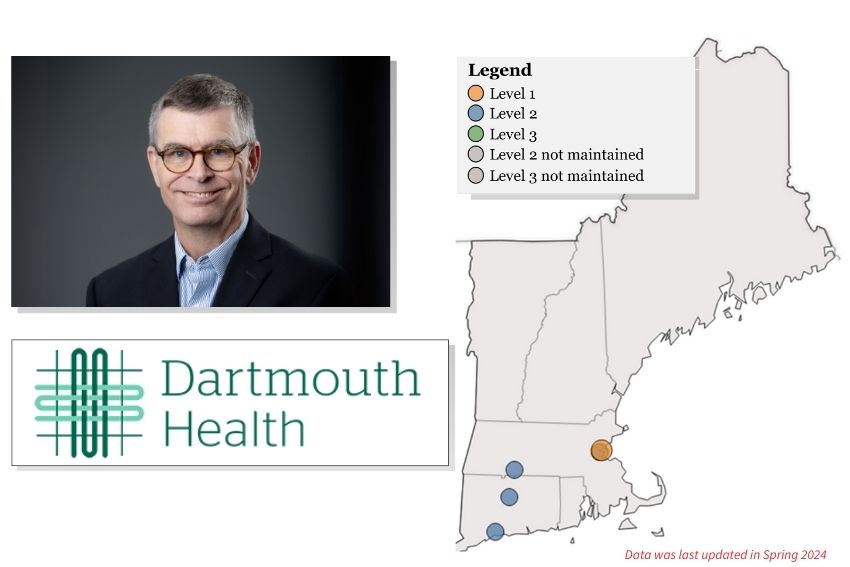
Dartmouth Health | Level 3
“The team at Massachusetts General Hospital (MGH) has been enormously helpful. We’ve got a great deal of proficiency in PPE, but because we want to take a regional partnership approach, we decided to base our PPE on MGH recommendations. We leverage their expertise and the procedural work they’ve already developed to incorporate into our program, with the appropriate modifications to make it work in our setting. We will continue the partnership with the Regional Disaster Health Response System (RDHRS) at MGH to develop a core foundation for the Dartmouth Hitchcock Medical Center program, and then use that to work with the other hospitals in the Dartmouth Health system to implement programs in their individual facilities.”
Wesley Miller, MA-EM
Director, Emergency Management
Dartmouth Hitchcock Medical Center
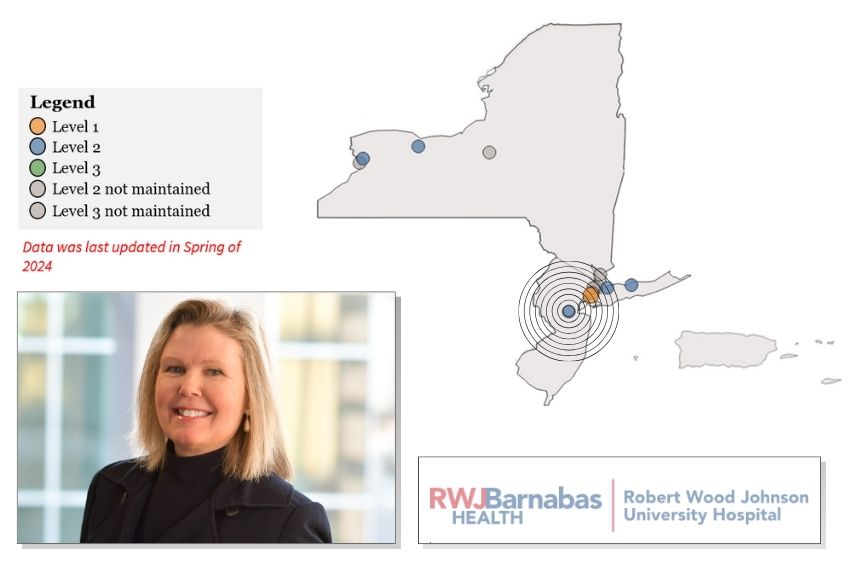
Robert Wood Johnson University Hospital | Level 2
“We have a longstanding relationship with Bellevue Hospital that dates back to before the pandemic. Like many other health care facilities, the pandemic had a significant impact on our workforce. Partnering with Bellevue has been crucial as we work to rebuild our team in the wake of these challenges. Bellevue’s support through education and training, along with NETEC’s resources such as virtual site assessments (partnering with Nebraska) and a robust website, have been essential in guiding us to optimize our hospital’s operations and identify areas for improvement.”
Michele F. Pedrani, MS, RN, CIC, CSN-NJ
Director, Infection Prevention

Geisinger Health System | Level 2
“We currently have Level 1, 2, 3, and 4 trauma centers in our region, which offer access to care and specialty resources unique in a rural community setting. As an NSPS Level Two facility in a rural health system, Geisinger can provide special pathogens care and resources that many other rural communities nationwide don’t have. Our goal is to encourage other health care facilities to become Level Three or Four NSPS facilities to enhance access to innovative and supportive care for our communities, similar to the trauma system.”
Stephanie Gryboski, MHA
Associate Vice President, Emergency Medicine, Employee Health, Emergency Management
Geisinger College of Health Sciences – Student Health Services
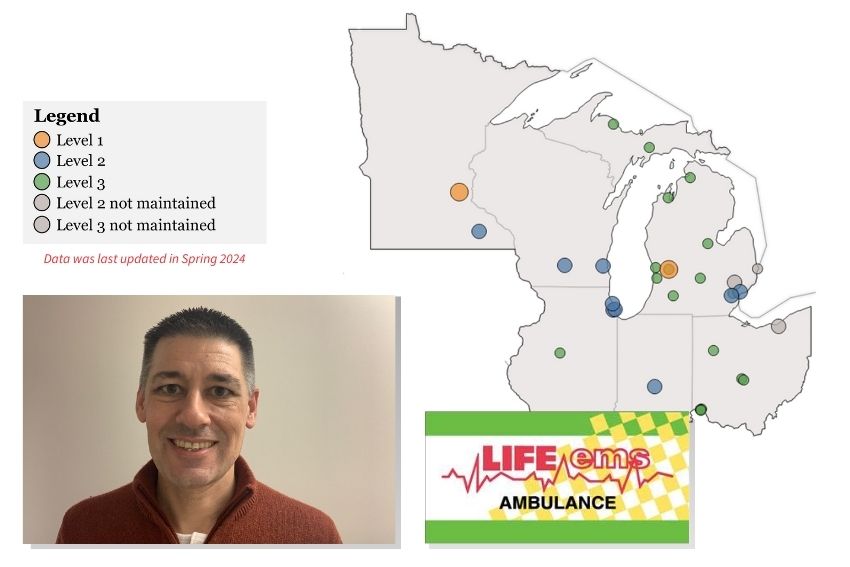
Life EMS
“After the Ebola outbreak in 2014, Life EMS took an important step in joining the NSPS tiered system of care. We have formed a great partnership with Corewell Health (Level 1 RESPTC) since then, became involved in preparedness planning, gained valuable training experience and resources with the support of NETEC, and also shared our expertise as EMS experts. As transporting a patient diagnosed or suspected with a special pathogen has unique challenges, we understand the importance of EMS transport within NSPS, particularly in the Great Lakes region which has a major international airport.”
Nathanial R. Potter
BBA, EMT-CCP
Health and Safety Coordinator
Life EMS Ambulance

Barnes-Jewish Hospital | Level 3
“The Region 7 calls are great for knowledge sharing and bringing experiences from the region back to our emerging infectious diseases (EID) program. To protect our healthcare workers and patients in the hospital, we are taking steps to ensure that the EID program is solid and that our team members are trained and ready to respond to any special pathogen event.”
Elizabeth Puzniak, MPH, CPH
Manager, Emerging Infectious Diseases (EID) Program
Barnes-Jewish Hospital

Sanford Health | Level 3
“As part of the NSPS system our hospitals in Fargo, North Dakota, and Sioux Falls, South Dakota, have worked directly with Denver Health [the RESPTC in Region 8] and with NETEC subject matter experts from all over the nation who have participated in and observed exercises, led trainings, and provided guidance. In the emergency management and health care world, there are many different organizations and agencies available to provide assistance. NETEC rises to the top of that list for subject matter expertise and knowledge, a flexible approach to preparedness in various settings, and dedication to helping us do the best we can for our communities and our patients. From where we were before working with NETEC to where we are today, we’re light years ahead, which is not only good for our organization, but it’s good for our patients and the communities that we serve.”
Matt Van Voorhis, MBA
Director, Enterprise Emergency Operations
Sanford Health

Legacy Health | Level 3
“Our partnership with Providence Sacred Heart Medical Center and Children’s Hospital has grown over the years. Christa Arguinchona and other NETEC leaders visited us in 2018 for an onsite assessment to help support our work as a regional team. Christa has always been a trusted colleague whom we can rely on for her expertise and collaboration. Christa’s team makes an effort to elevate Legacy Health, providing us with a platform to talk about our program and get involved in opportunities to establish connections and strengthen our program. Providence is dedicated to sharing knowledge for the benefit of all, which is a unique and valuable aspect of their program.”
Jesse McGinty, MPH
Infection Prevention Program Manager | Special Pathogens
Biological Isolation Care Unit (BICU) | Legacy Health

MultiCare Health | Level 4
“We couldn’t ask for better partners. Christa, Brooke, Darrell, and the rest of the team have been amazing. Our staff often take “field trips” to the Sacred Heart biocontainment unit and every time I visit, I learn something new. It’s great to know that we have experts to help with training and provide subject matter expertise here locally, but then to consider the outreach they do to other facilities within the Pacific Northwest – it’s invaluable. Many smaller hospitals don’t have the resources to dedicate to special pathogens preparedness. Sacred Heart bridges that gap in Region 10 – they are a source of knowledge and expertise and ensure all of our hospitals—even the small hospitals—have at least some sort of special pathogens response capability.”
Ken Mitchell
Safety Officer, MultiCare Inland Northwest
The MultiCare health system includes more than 300 primary, urgent, pediatric and specialty care locations across Washington, Idaho and Oregon, as well as 13 hospitals.
Where We Are & Where We Are Going
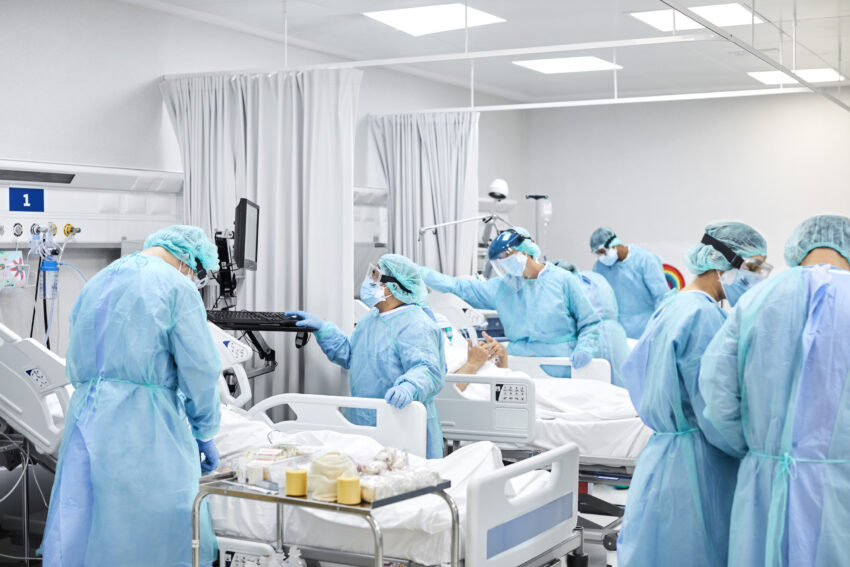
Designed to ready the United States healthcare system for any high-consequence infectious disease outbreak, the NSPS will make consistent healthcare readiness a reality by preparing the healthcare workforce to respond to special pathogen threats to save lives, protect the healthcare workforce, and the communities they serve.
