Dengue for Health Care Providers: Essential Takeaways from the “Transmission Interrupted” Podcast
Share this article
Dengue, a mosquito-borne disease, is a significant and expanding global health issue. To date, there have been over 13 million dengue cases and more than 9,600 dengue-related deaths in 2024. As case numbers rise, understanding the nuances of diagnosis, management, and prevention becomes crucial for health care providers.
In a recent episode of “Transmission Interrupted,” host Jill Morgan, NETEC PPE Workgroup Co-Chair, and a member of the biocontainment team at Emory University Hospital, interviewed Dr. Joshua Wong, an internal medicine physician, an officer with the United States Public Health Service Commissioned Corps, and a medical officer at the Centers for Disease Control and Prevention’s Dengue Branch, about dengue. Here are the key takeaways from their discussion.
Dengue Cases in the United States
The United States is experiencing record-high travel-associated dengue cases in 2024, the highest since dengue became a nationally notifiable disease in 2010. There have been more than 8,000 cases of dengue in 52 jurisdictions this year.
Travel-related cases may continue to rise, along with limited chains of local transmission linked to those cases. However, local cases can occur in any state with an established population of Aedes aegypti or albopictus mosquitoes. Traditionally, states such as Florida, Texas, and Hawaii have reported locally acquired cases. However, local dengue transmission has been reported in new jurisdictions, such as two cases in Arizona in 2022 and in California (two in 2023 and 15 in 2024). In 2024, 96 percent of infections in the U.S. were locally acquired in Puerto Rico, where there is an ongoing public health emergency due to dengue.
While large outbreaks in the continental U.S. are unlikely, responding to even a few cases of local transmission in non-endemic areas is highly resource-intensive and requires a robust public health response. This includes enhanced surveillance, case investigation, entomological assessments, implementation of control measures, and physician education.
What’s the Difference Between Travel-Associated and Locally Acquired Cases?
A travel-associated (or imported) case means that a person with dengue became infected during travel to another area with dengue. When a traveler gets infected and returns home, local mosquitoes can get infected by biting the traveler. Then the infected mosquito can spread the virus to other people through bites. Locally acquired cases (local transmission) means that mosquitoes in the area have been infected with dengue and have spread it to people.
How Dengue Spreads
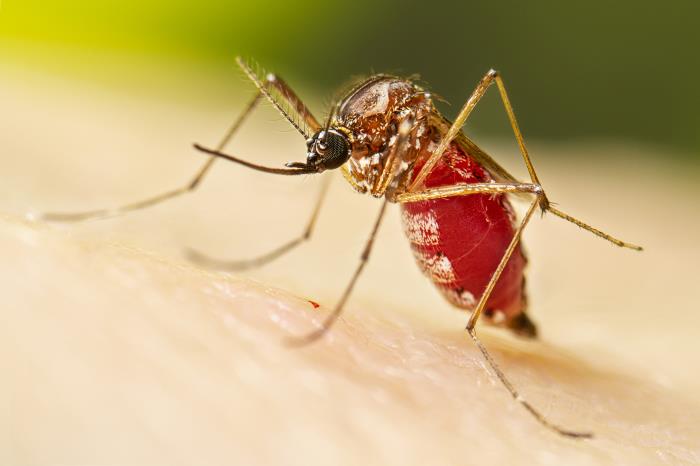
Dengue viruses (DENV) are mainly spread to people through the bite of infected Aedes species (Ae. aegypti or Ae. albopictus) mosquitoes. The virus is not spread from person to person through coughing, sneezing, or touching. Less common but possible routes of transmission include via breast milk, in laboratory settings, or exposures through blood transfusions, transplants, or needle stick injuries. There is some evidence suggesting that dengue can be spread through sexual contact.
Laboratory Testing and Diagnosis
A blood test is the only way to confirm a dengue diagnosis. Testing is available through state and local health departments. Early testing with reverse transcription polymerase chain reaction [RT-PCR] and IgM antibody tests, or non-structural protein 1 [NS1] antigen tests and IgM antibody tests, is crucial within the first seven days of fever onset.
If dengue is suspected, clinicians should provide appropriate clinical management without waiting for test results due to the risks of the illness rapidly progressing to a life-threatening stage. Learn more about clinical testing and diagnosis.
Dengue is a nationally notifiable disease in the United States; report all suspected cases to the state or local health department.
Initial Signs and Symptoms
About one in four dengue virus infections are symptomatic. Early signs and symptoms are non-specific, but health care providers should include dengue in their differential diagnosis if a patient has a fever, severe headache, retro-orbital pain, muscle or joint pain, macular or maculopapular rash, and lives or has recently traveled to an area with risk of dengue in the last 14 days. Dengue presents similarly in both adults and children. See the Clinical Features of Dengue.
Warning Signs of Severe Dengue
Approximately one in 20 patients with symptomatic dengue progresses to develop a severe, life-threatening disease called severe dengue. Warning signs of progression to severe dengue usually occur in the late febrile phase, around the time that the patient’s fever begins to subside and lasting 24-48 hours.
The warning signs of severe dengue include:
(1) Intense continuous abdominal pain or tenderness,
(2) Persistent vomiting: ≥3 episodes in 1 hr or ≥4 in 6 hrs,
(3) Fluid accumulation: Pleural effusion, ascites, or pericardial effusion,
(4) Mucosal bleeding: Gums, nose, vagina (metrorrhagia or hypermenorrhea), kidney (macroscopic hematuria),
(5) Altered mental status: Irritability, drowsiness, Glasgow Coma Scale score <15,
(6) Hepatomegaly: ≥2cm below costal margin, and
(7) Progressive increase of hematocrit: hemoconcentration, in at least 2 consecutive measurements taken 6 hours apart.
The most common presentation of severe dengue is plasma leakage leading to shock. Therefore, recognizing early signs of shock and promptly initiating intensive supportive therapy with intravenous fluids can reduce the risk of death among patients with severe dengue to <0.5%.
How Dengue Got Its Name
The origins of the term “dengue” are unclear. Some theories suggest it stems from a Swahili phrase or an old Spanish vernacular. What is certain, however, is that dengue is notorious for the intense pain it causes. A more descriptive name for the disease, “breakbone fever,” was first coined by Dr. Benjamin Rush, an American physician, in 1789. He used this term to describe the excruciating muscle and joint pain experienced by patients during a dengue outbreak in Philadelphia. The pain was so severe that it felt as if their bones were breaking, giving rise to the name “breakbone fever.”
Treatment and Care
Clinical management is the cornerstone of dengue care, as there are no antiviral medications approved to treat dengue. Triaging and treating patients should be based on the World Health Organization’s (WHO) classifications and guidelines. The WHO classifies dengue into three categories based on:
- the phase of the disease: are they in the febrile, critical, or convalescent phase?
- whether the patient has comorbidities that increase the risk of severe dengue: pregnancy, acute renal failure, coagulopathies, hypertension, asthma, diabetes, chronic kidney or liver disease, peptic ulcer disease or other gastritis, BMI>30kg/m, infants under 1 year and adults >65 years, and
- whether they have warning signs of severe disease.
The category of dengue will guide clinical treatment and care. Download the CDC pocket guide for Dengue Management.
Vaccines
The CDC’s Advisory Committee of Immunization Practices (ACIP) recommends the vaccine Dengvaxia for people who have laboratory-confirmed previous dengue infection, live in areas where dengue is common, and are between the ages of nine and 16. However, the manufacturer is discontinuing production of Dengvaxia dengue vaccine, citing a lack of demand in the global market, and the available vaccine doses will expire in August 2026.
Another vaccine, Takeda’s QDENGA, is recommended by the WHO in children between the ages of six and 16 in settings with high dengue transmission. However, this vaccine is not available in the U.S.
No other dengue vaccine is currently available in the United States, but other dengue vaccines are being evaluated in late-stage trials and studies. The CDC’s APIC Dengue Vaccines Work Group will continue to review dengue vaccines as they become available in the United States.
Infection Prevention in Health Care Settings
Rarely, dengue is spread in laboratory or health care setting exposures through blood transfusions, organ transplants, or needlestick injuries. DENV belongs to the risk group 2 pathogens. Work with DENV is conducted in BSL-2 laboratories, especially labs conducting diagnostic testing. There are no special biosafety requirements for DENV aside from the standard precautions needed with blood-borne pathogens.
For additional information on risk group 2 pathogens and recommendations for work with this group, refer to the Biosafety in Microbiological and Biomedical Laboratories (BMBL) 6th edition published by CDC and NIH. Biosafety in Microbiological and Biomedical Laboratories—6th Edition (cdc.gov)
Resources for Health Care Personnel
- https://www.cdc.gov/dengue/index.html
- Clinical Care of Dengue | Dengue | CDC
- Health Alert Network (HAN) – 00511 | Increased Risk of Dengue Virus Infections in the United States (cdc.gov)
- Dengue | CDC Yellow Book 2026
- 20240521_342849-B_PRESS_READY_PocketGuideDCMC_UPDATE.pdf (cdc.gov)
- Dengue Clinical Management Course | Dengue | CDC (CDC, Accessed 12/2024, https://www.cdc.gov/dengue/hcp/training/index.html)
- Current Dengue Outbreak | Dengue | CDC (CDC, Accessed 12/2025, https://www.cdc.gov/dengue/outbreaks/2024/index.html)
- Global Dengue – Level 1 – Level 1 – Practice Usual Precautions – Travel Health Notices | Travelers’ Health | CDC
- Biosafety in Microbiological and Biomedical Laboratories—6th Edition (cdc.gov)
About the Expert
Dr. Joshua Wong is a medical officer and epidemiologist with the Centers for Disease Control and Prevention stationed at the Dengue Branch in San Juan, Puerto Rico, and a Lieutenant Commander in the United States Public Health Service Commissioned Corps. He graduated from Harvard Medical School and completed his residency training in the Global Health Track in Internal Medicine at Stanford University. He served as an Epidemic Intelligence Service officer at the Centers for Disease Control and Prevention’s Dengue Branch. After his fellowship, he remained at the branch to continue working on dengue vaccine activities and support the emergency response to dengue both domestically and abroad.

Get Expert Assistance
Ask a NETEC expert a question or request free services for your facility.
Find Resources
Explore special pathogen resources created and curated by NETEC experts.