NSPS Conducts World Cup 2026 Tabletop Exercise: Preparing for Global Health Security During Major Sporting Events

Share this article
As North America prepares to host the largest FIFA World Cup in history in June 2026, healthcare preparedness experts are already working to advance robust readiness for a special pathogen event. The National Special Pathogen System (NSPS) recently conducted a national tabletop exercise focusing on potential health security challenges during this landmark sporting event.
The Stakes: World Cup 2026 as an Unprecedented Global Gathering
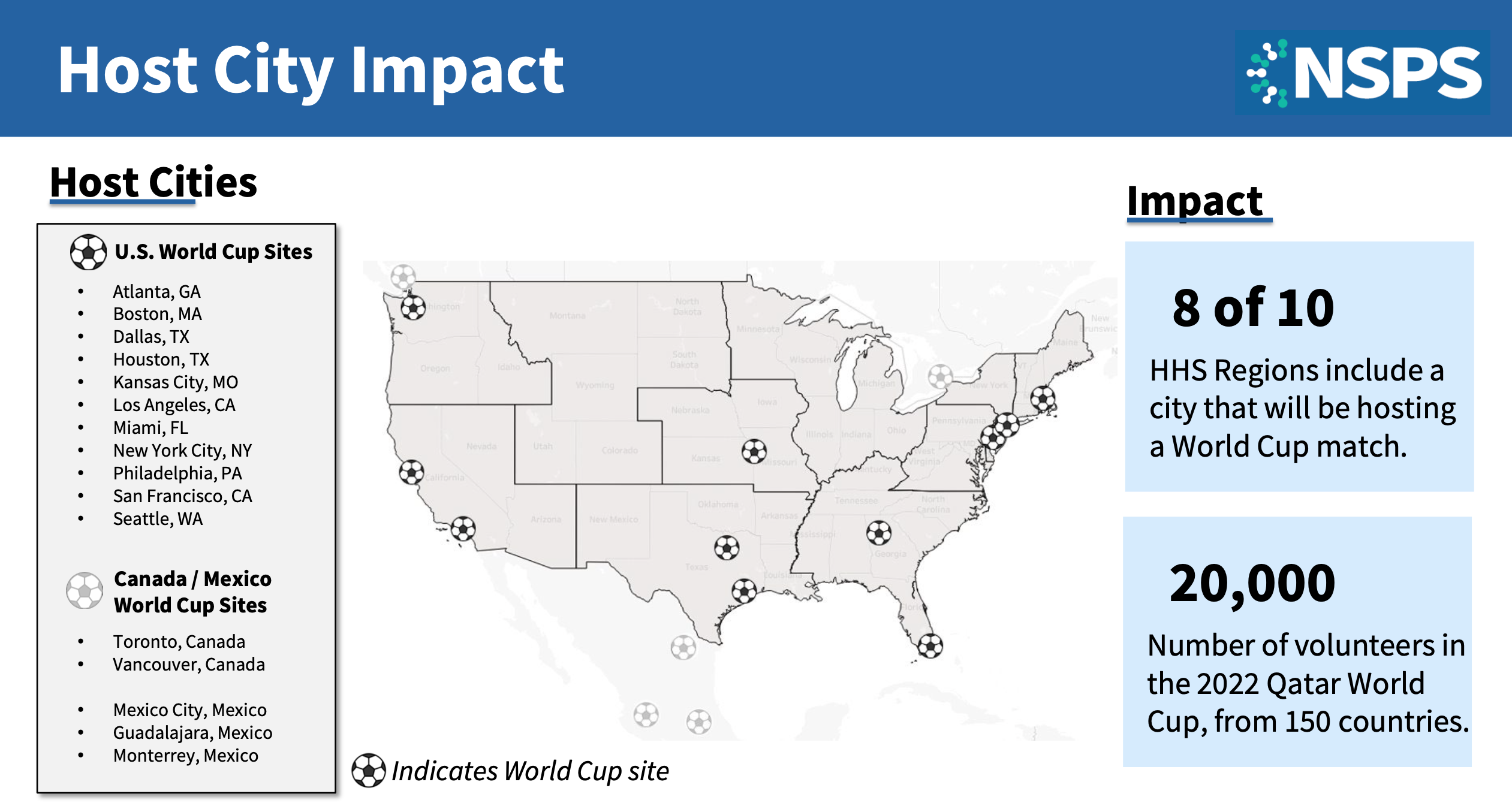
The 2026 FIFA World Cup represents the biggest tournament since the competition’s inception in 1930. With 48 participating countries, 104 matches, and 16 host cities spread across the United States, Canada, and Mexico, the 39-day event will bring together millions of visitors from around the world. The scale is staggering—for perspective, if every stadium is full for every game, 7.0 million people will be in attendance.
Exercise Goals and Objectives
The tabletop exercise, designed by NSPS and the National Emerging Special Pathogen Training and Education Center (NETEC), the coordinating body for NSPS, focused on three critical objectives:
- Aligning roles and responsibilities among NSPS facilities and partners during a special pathogen response
- Establishing clear notification and communication processes between NSPS partners
- Coordinating response operations, including transportation arrangements, laboratory testing, and clinical capacity management
The Threat Landscape: MERS as a Test Case
The exercise centered around a scenario involving Middle East Respiratory Syndrome (MERS), highlighting the potential risks when large international gatherings create opportunities for disease transmission. With 8 out of 10 HHS regions including World Cup host cities, the exercise emphasized the need for coordinated response capabilities across a wide geographic area.
NETEC and NSPS: Critical Role in Preparedness
The tabletop exercise highlighted several critical components necessary for the successful management of special pathogen cases. These components emphasize the importance of timely actions, coordinated efforts, and comprehensive planning to validate preparedness and safety at all levels. Here are a few of the key takeaways:
- Initial priorities must include effective and prompt identification of suspect cases, quick isolation, specimen collection, state and regional coordination, and a clear communication process that will advance a successful outcome.
- Transportation is always complex. Teams need to be well trained and coordinated local, state—and at times cross-state and national—communication is essential. Weather and geography matter when selecting the appropriate type of transportation.
- Special populations like pediatrics and obstetrics require unique planning efforts.
- Communication, coordination, and collaboration between healthcare, public health, EMS, and state, local, and national agencies will be the key to the World Cup success and safety for communities and healthcare workers.
- Exercises like this one will advance readiness at the local, state, and national levels to prepare to quickly mitigate and respond to a special pathogen event should it occur.
Looking Ahead
With the World Cup approaching, this exercise represents a crucial step in advancing healthcare and public health preparedness for major international events. The lessons learned will help strengthen coordination between agencies, improve communication, and enhance response capabilities across the nation’s special pathogen care network.
As we look forward to hosting this historic sporting event in the U.S., exercises like these demonstrate the commitment of our public health and healthcare infrastructure to protecting both participants and spectators while validating readiness for any potential health security challenges that may arise.
Through in-depth planning, coordination, and training, NSPS and NETEC will elevate the joy and excitement of the World Cup 2026, matched by robust health security measures operating seamlessly behind the scenes.
About the Author
Shelly Schwedhelm, MSN, RN, NEA-BC
Shelly Schwedhelm serves as Associate Director for Clinical Operations and Emergency Management at the University of Nebraska Medical Center Global Center for Health Security (GCHS).
Shelly is the executive leader for the National Special Pathogen System and associated tiered system of care expansion, providing support to regions in the development of the hub and spoke model of support and readiness for special pathogens. She also serves as subject matter expert for the National Emerging Special Pathogen Training and Education Center (NETEC).