Ebola Response and Clinical Updates: Care, Laboratory Coordination, and Infection Control for U.S. Healthcare Teams
Share this article
On October 19, 2025, the World Health Organization (WHO) announced that the last Ebola patient in the Democratic Republic of the Congo (DRC) had been discharged, marking a major milestone in efforts to end the country’s 16th Ebola outbreak. The recovery begins a 42-day countdown to declaring the outbreak over if no new cases are confirmed. Since the outbreak was declared on September 4 in Kasai Province, 64 confirmed or probable cases and 43 deaths have been reported. Nearly 2,000 contacts completed their 21-day monitoring period, and more than 36,000 people were vaccinated through a ring vaccination approach focused on high-risk contacts, healthcare workers, and local populations.
Amid these developments, U.S. healthcare systems are closely following CDC’s active response to Ebola and other high-consequence infectious diseases (HCIDs). In this webinar, experts from CDC and NETEC shared updates on outbreak response activities, epidemiology, infection control, clinical management, and national coordination through the NSPS.
Speakers included Captain Barbara Knust (CDC), Captain Ryan Fagan (CDC), and Dr. Aneesh Mehta (NETEC/Emory University), joined by a multidisciplinary panel from CDC, ASPR, and NETEC.
Epidemiology
Ebola is a zoonotic disease that spreads through direct contact with infected blood or body fluids, contaminated materials, or infected animals. The only filovirus with a known reservoir is Marburg virus, which is found in the Egyptian fruit bat. Work continues to identify the reservoir host for Ebola virus.
Because symptoms can resemble other febrile illnesses, early recognition and risk assessment are critical, as timely identification enables rapid public health and clinical response to contain transmission.
Common initial symptoms include:
- Fever and headache
- Muscle and joint pain
- Fatigue and loss of appetite
- Gastrointestinal symptoms such as vomiting or diarrhea
Progressive symptoms may include:
- Multi-organ failure
- Neurologic symptoms
- Hemorrhagic manifestations (in fewer than half of patients)
Clinicians should always:
- Obtain a detailed travel history (countries, regions, and dates of travel).
- Assess for specific risk factors, such as exposure to sick individuals or funerary practices.
- Remember that malaria remains the most common cause of febrile illness in travelers from sub-Saharan Africa and should be tested concurrently.
If Ebola is suspected, clinicians should immediately contact their state or local health department and follow established patient assessment and testing protocols. Identify points of contact and on-call information for your health departments in advance. The CDC Emergency Operations Center (EOC) provides 24/7 consultation via the Viral Special Pathogens Branch and can assist in identifying public health contacts (770-488-7100).
CDC Response and Clinical Guidance
The Centers for Disease Control and Prevention (CDC) has maintained a presence in the Democratic Republic of the Congo (DRC) since 2002, working closely with the government and partner organizations to detect, prevent, and control infectious disease outbreaks. In response to the 16th Ebola outbreak, more than 100 CDC staff from U.S. headquarters and the DRC office supported the response both in the outbreak area and for U.S. healthcare systems.
On-the-ground support in the DRC included:
- Deployment of response teams to Kinshasa and the outbreak zone in Kasai province to provide technical guidance and operational support in disease detection, laboratory operations, infection prevention and control (IPC), logistics, information technology, and global security.
- Assistance with implementing ring vaccination using rVSVΔG-ZEBOV-GP (Ervebo®), the only FDA-approved vaccine effective against Zaire ebolavirus, targeting high-risk contacts, healthcare workers, and local populations.
- Facilitation of FDA-approved therapeutics, including Ebanga® and Inmazeb®, for patients with laboratory-confirmed Ebola virus infection, and monitoring to ensure timely administration.
- Support for contact tracing and monitoring of exposed individuals throughout the 21-day incubation period to prevent further transmission.
- Coordination of laboratory testing, specimen handling, and safe transport procedures for high-risk samples.
- Support for community and mortality surveillance, and support services for people who recovered from Ebola infection. These activities will be ongoing for months after the outbreak has ended.
- Transfer of critical materials, including laboratory tests, testing supplies, and personal protective equipment (PPE), to bolster local healthcare and laboratory teams.
Support for U.S. healthcare systems and public health departments included:
- 24/7 clinical consultation and laboratory coordination through CDC’s Emergency Operations Center (EOC), including guidance on evaluating epidemiologic risk factors and clinical presentation, coordination for testing and specimen transport via the Laboratory Response Network (LRN), assistance with confirmatory testing and laboratory logistics, and support in identifying appropriate care facilities for patient referral.
- Issuance of public health communications to safeguard U.S. populations, including a Level 1 Travel Health Notice for the DRC, a Health Alert Network (HAN) notice summarizing guidance for healthcare providers and public health departments, and rapid assessments of the outbreak risk to the United States, including scenario modeling for potential outbreak progression.
Through these combined efforts, CDC provided critical technical support to contain the outbreak in the DRC while ensuring U.S. healthcare systems remained informed, prepared, and connected to national response resources.
Vaccines and Treatments
Several medical countermeasures are available to prevent and treat Ebola virus disease:
Vaccines:
- rVSVΔG-ZEBOV-GP (Ervebo®) is a single-dose vaccine and the only FDA-approved option effective against Zaire ebolavirus, the strain responsible for this outbreak. The vaccine both protects from infection and reduces mortality among people vaccinated who develop infection.
- Vaccination strategies, such as ring vaccination, target high-risk contacts, healthcare workers, and local populations.
- Vaccines are for prevention, not treatment, and recipients may test positive for the EBOV glycoprotein for about a week—important for interpreting diagnostic tests
Therapeutics:
- FDA-approved treatments for laboratory-confirmed Ebola include Ebanga® (single monoclonal antibody) and Inmazeb® (combination of three monoclonal antibodies). Both are administered as a single intravenous infusion. During this outbreak, patients received Ebanga®, with the only eligibility criterion being laboratory-confirmed Ebola virus infection.
- Early administration of therapeutics significantly reduces mortality; each day a symptomatic patient delays care increases the risk of death by ~11%. Supportive care—including fluid and electrolyte management—further improves survival outcomes.
Laboratory Testing and Specimen Handling
Safe and timely laboratory testing is critical for both patient care and outbreak control.
- Ebola test turnaround times vary depending on the location of the testing facility. Transport time and presumptive result processing both affect total turnaround.
- Because Laboratory Response Network (LRN) capabilities differ, facilities should contact their local LRN lab to confirm available testing capacity.
- CDC and NETEC recommend alerting laboratory staff early when potential HCID patients are identified—and that clinicians notify the lab before sending any specimens.
- Shipping note:
- Samples suspected of containing a Category A organism must comply with Category A shipping requirements.
- Presumptive or confirmed Risk Group 4 specimens (e.g., Ebola virus) will not be accepted by FedEx or similar carriers.
Infection Prevention and Control (IPC)
U.S. healthcare facilities play a critical role in containing Ebola and other viral hemorrhagic fevers. CDC’s IPC guidance follows the Identify–Isolate–Inform framework, ensuring suspected patients are recognized early, safely managed, and reported to public health authorities.
Identify
- Screen all patients at intake for fever, rash, respiratory symptoms, and travel history; assess for exposures to sick individuals or high-risk practices.
- The Joint Commission now requires hospitals to maintain screening processes for these criteria, reinforcing readiness for routine and high-consequence pathogens.
Isolate
- Place suspected patients in a single room with a closed door and a dedicated bathroom.
- For unstable patients or those requiring aerosol-generating procedures, use an airborne infection isolation room (AIIR) when possible.
- Provide sufficient space for donning and doffing PPE with trained observers.
Inform
- Facilities should have processes in place to immediately inform infection control, key staff, and public health authorities.
- The Council for State and Territorial Epidemiologists (CSTE) maintains a list of regular and after-hours phone numbers for contacting local and state health departments.
- The CDC EOC supports health departments 24/7 and can assist with testing coordination or deployment of resources.
- Timely consultation helps guide differential diagnosis, determine the need for ongoing isolation, and support testing decisions.
Personal Protective Equipment (PPE)
CDC’s VHF PPE guidance distinguishes between:
- Dry/Suspect PPE: for stable patients without bleeding, vomiting, or diarrhea.
- Wet/Confirmed PPE: for patients with fluid exposure or invasive procedures.
Refer to the CDC VHF PPE Guidance and FAQs for detailed donning and doffing procedures.
Training and Competency:
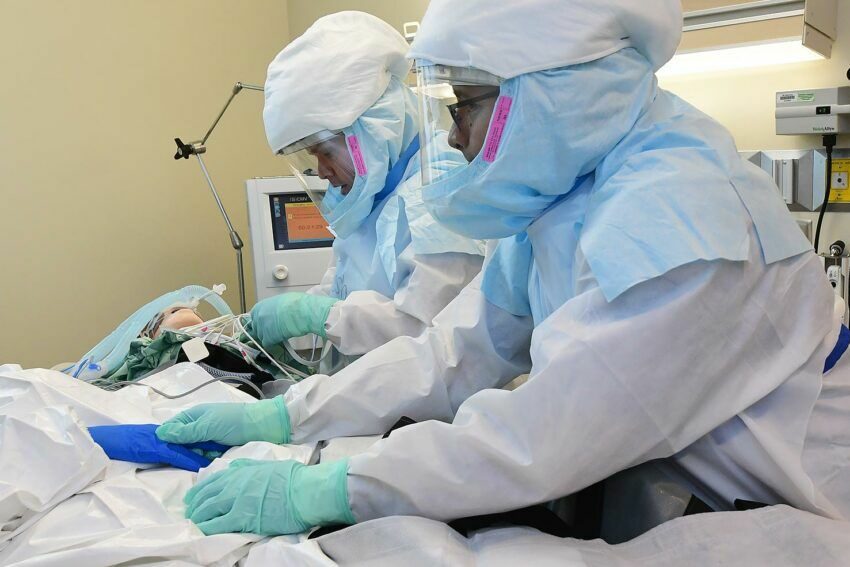
Complex PPE ensembles for special pathogens are not intuitive and differ from routine infection control practices. Ongoing training minimizes healthcare worker (HCW) exposure, particularly during PPE doffing and waste handling.
Each facility should:
- Ensure personnel are familiar and competent with PPE protocols.
- Designate Trained Observers—often infection preventionists or experienced “super users”—to monitor for safe PPE use, proper waste handling, and correct doffing procedures.
Cleaning, Disinfection, and Waste Management
All facilities must comply with federal, state, and local regulations governing handling, storage, treatment, and disposal of VHF-associated waste. Solid waste generated during Ebola patient care is Category A waste and requires a special DOT permit (SP16279) to transport. See Appendix F1 in U.S. Department of Transportation (DOT) regulations for requirements on packaging, transport, and permitting of Category A waste.
Key points:
- Use only EPA-registered disinfectants approved for viral hemorrhagic fevers and other emerging viral pathogens (see EPA List Q).
- Avoid porous materials that cannot be disinfected.
- Discard contaminated linens and textiles.
- Coordinate with your waste management company before disposal of nonstandard items such as mattresses or furniture.
Category A waste management should be planned proactively, as patients may present unexpectedly at any location. Developing a mitigation and disposal pathway in advance is best practice and essential for rapid response.
Coordination and Response through NETEC and the NSPS
During outbreaks, NETEC and NSPS partners activate rapid coordination across federal, regional, and local levels to support patient care, infection control, and deployment of medical countermeasures.
Activities include:
- Verifying outbreak details with CDC and ASPR.
- Alerting Regional Emerging Special Pathogen Treatment Centers (RESPTCs) to review readiness and response capabilities.
- Conducting a national assessment of medical countermeasures (therapies, diagnostics, investigational tools) for deployment.
- Maintaining up-to-date IRB and MCM deployment protocols for Level 1 facilities.
- NETEC also hosts real-time coordination calls to share updates, discuss challenges, and reinforce infection control practices.
NETEC and the RESPTCs also support health departments and public institutions in updating CONOPS and HCID response plans—contact info@netec.org for assistance.
Recommended Facility Actions
- Complete the Healthcare Facility Viral Hemorrhagic Fever Preparedness Checklist.
- This tool helps facilities identify strengths, close gaps, and prioritize actions for readiness across staffing, PPE, isolation capacity, and waste management.
- Access the Healthcare Facility VHF Preparedness Checklist
- Request a NETEC consultation.
- NETEC provides free virtual or on-site technical assistance, connecting healthcare teams with subject matter experts in infection control, clinical operations, and special pathogen readiness.
- Request a consultation
- Review and update facility-specific response plans.
- Ensure leadership and staff know how to contact local and state health departments, including after-hours and on-call numbers.
- The CDC Emergency Operations Center (EOC) can also assist in identifying jurisdictional health department contacts and supports coordination 24/7 through the Viral Special Pathogens Branch.
Conclusion
Every Ebola event reinforces the importance of early identification, coordinated response, and protection of healthcare workers. CDC, ASPR, and NETEC continue strengthening national resilience, ensuring U.S. healthcare facilities are prepared to identify, isolate, inform, and respond when HCIDs appear.
Explore Resources
- Watch the webinar and download the slides and FAQ from the webinar
- NETEC Ebola Resources
- CDC VHF PPE and IPC Guidance
- State-by-state Regulated Medical Waste Resource Locator (Hercenter, Accessed 2025, https://www.hercenter.org/rmw/rmwlocator.php)
- Appendix F-1. Ebola and Marburg
- Patient Placement: CDC Infection Control Guidance
- PPE (including training videos): CDC PPE Guidance
- Environmental Infection Control: Hospital Environmental Infection Control
- Guidance for Emergency Services (Ground, Air, 9-1-1): CDC Emergency Guidance
- Waste Management:
- CDC Waste Handling Guidance
- State Regulator Locator (HER Center) (HER Center, Accessed 2025, https://www.hercenter.org/rmw/rmwlocator.php)
- DOT/PHMSA Category A Solid Waste Guidance
- Monitoring and Management of Healthcare Personnel (HCP):
- Exposure Risk and Public Health Strategy
- Recommendations for Organizations Sending U.S.-Based Personnel to VHF Outbreak Areas:
- CDC Partner Recommendations
- Safe Handling of Human Remains:
- CDC Mortuary and Hospital Guidance
New CDC Listserv for U.S. Organizations Sending Personnel to VHF Outbreak-Prone Areas
This listserv provides rapid communication from CDC to U.S.-based organizations deploying personnel—such as trainees, students, and volunteers—to areas experiencing viral hemorrhagic fever (VHF) outbreaks.
Key Benefits:
- Timely CDC updates during new outbreaks
- Access to pre-, during-, and post-deployment safety recommendations
Sign Up:
Visit the CDC VHF Healthcare Listserv subscription page, enter your email, and click Register.