From Wound Care to Waste Disposal: What Healthcare Facilities Need to Know About New World Screwworm
Share this article
As the United States responds to ongoing New World screwworm detections in animals, healthcare providers should also understand the potential for rare human cases, particularly in patients who have traveled from areas where the parasite is endemic or animal agricultural workers who have cared for infected livestock. While the current risk to the U.S. public remains very low, suspected cases require not only appropriate clinical care but also careful attention to specimen handling and waste disposal.
When most healthcare providers think about wound care, they focus on the patient in front of them. Rarely does anyone stop to consider whether something removed from a wound could pose a risk to livestock, wildlife, public health, and even the environment after it leaves the facility.
Yet that’s exactly the concern with New World screwworm.
While hospitals may only rarely encounter a suspected human case, the consequences of mishandling even a single case extend beyond the healthcare setting. New World screwworm is a classic One Health issue—one that connects human health, animal health, agriculture, and the environment. Preventing the parasite from becoming established requires coordinated action across all of those sectors.
In a recent episode of Transmission Interrupted, host Jill Morgan spoke with Ashley Perry, Director of Hazardous Waste Services at Daniels Health, and Shawn Gibbs, PhD, Dean of the Texas A&M University School of Public Health, about why healthcare organizations have an important role to play in preventing the spread of this destructive parasite.
While the parasite itself is unsettling, the conversation highlighted a larger lesson for healthcare organizations: preparedness doesn’t end when the patient is treated. In some situations, what happens after treatment may be just as important as the treatment itself.
What Is New World Screwworm?
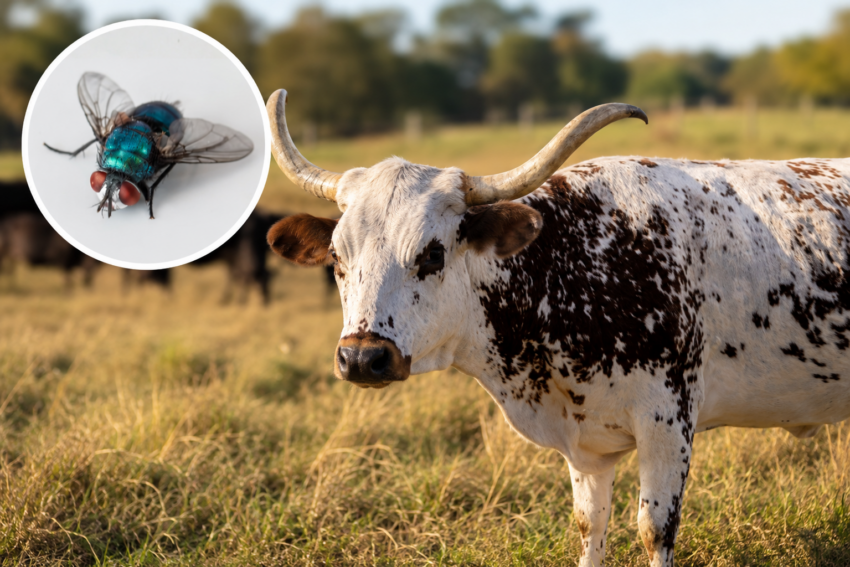
New World screwworm is a parasitic blow fly that lays its eggs in wounds or natural body openings of living animals—and occasionally humans. Unlike many fly larvae that feed on dead tissue, screwworm larvae feed on living tissue, causing severe damage as they burrow deeper into their host.
The consequences can be devastating. Untreated infestations can kill livestock, wildlife, pets, and in rare cases, severely harm humans. Even a treated infection will cause the animal severe pain and distress, and may reduce the animal’s suitability for human consumption. The parasite remains endemic in parts of Central America, South America, and the Caribbean, making travel and animal movement ongoing concerns for U.S. public health and agriculture.
For decades, the United States has successfully controlled New World screwworm through extensive surveillance and eradication efforts. One of the most remarkable strategies involved releasing sterile male flies to interrupt the parasite’s reproductive cycle, an international collaboration that successfully eliminated the pest from the United States decades ago. Maintaining that success depends on continued vigilance—not only by agriculture and public health officials, but also by healthcare providers who may encounter rare imported human cases.
Why Healthcare Facilities Should Care
Most healthcare providers are not expected to identify one species of fly larva from another. However, clinicians may encounter larvae or eggs while treating infected wounds, particularly in patients who have traveled from areas where screwworm is present.
Eggs may resemble small grains of rice and can hatch into larvae in as little as eight hours. As the larvae mature, they burrow deeper into living tissue, making infestations more difficult to detect and treat.
Any suspicious case should be approached cautiously and managed according to public health guidance while awaiting definitive identification. Improperly handled specimens could allow the parasite’s lifecycle to continue outside the healthcare setting. A healthcare facility that unknowingly discards viable eggs or larvae could inadvertently contribute to environmental spread.
In other words, New World screwworm is not simply a clinical concern—it is also a waste management challenge.
Healthcare Is One Part of a Larger Response
Although healthcare facilities may only occasionally encounter New World screwworm, they represent an important checkpoint in preventing the parasite from spreading.
Most infestations occur in livestock and wildlife, where detection often happens outdoors under far different conditions than a hospital or laboratory. Animals cannot report symptoms, and infestations may go unnoticed until they become extensive. Healthcare providers, veterinarians, agricultural extension professionals, environmental health specialists, and public health agencies all play complementary roles in recognizing suspected cases, preventing environmental spread, and protecting both human and animal health.
The First Step: Collect and Preserve Specimens
If New World screwworm is suspected, healthcare personnel should collect larvae for identification according to public health guidance.
Current recommendations include:
- Collecting at least 10 larvae when possible (or all available specimens)
- Placing specimens in a leak-proof container
- Preserving them in 70% ethanol, 70% isopropyl alcohol, or another approved preservative
- Submitting specimens for identification through appropriate public health channels
These steps help ensure accurate identification while preventing further development of the larvae.
The Unexpected Challenge: One Patient, Two Waste Streams
This is where New World screwworm differs from many other infectious disease scenarios.
A suspected case may generate two separate waste streams.
1. Preserved Larvae and Eggs
Specimens preserved in ethanol or isopropyl alcohol present a regulatory challenge. While the alcohol serves an important purpose in killing and preserving the larvae, it also creates a hazardous waste stream.
Under the Resource Conservation and Recovery Act (RCRA), alcohol-based preservation fluids are considered hazardous waste because they are flammable. As a result, containers holding preserved larvae may require hazardous waste management procedures.
That means preserved specimens should not simply be discarded in regular trash or as regulated medical waste.
2. Contaminated PPE and Patient Care Materials
Personal protective equipment, dressings, and other contaminated materials may typically be managed as regulated medical waste, depending on organizational policies and local regulations.
Understanding the distinction between these two waste streams is essential for both compliance and safety.
What Not to Do
One common misconception is that facilities can simply allow the alcohol to evaporate before disposal.
As Ashley Perry explained, intentionally evaporating hazardous waste may be considered treatment under EPA regulations and can create additional compliance concerns. It also introduces unnecessary spill and exposure risks.
The safer approach is straightforward:
- Keep preserved specimens sealed in leak-proof containers.
- Follow hazardous waste management procedures.
- Coordinate disposal with qualified waste vendors and environmental health professionals.
Preparation is almost always easier than explaining a disposal decision after the fact.
Preparedness Prevents Problems
Fortunately, most healthcare facilities are unlikely to encounter New World screwworm frequently. That’s exactly why planning ahead matters—when a rare event occurs, there may be little time to develop procedures on the fly.
Healthcare preparedness extends beyond having the right clinical protocols. Facilities should understand how suspected screwworm cases intersect with laboratory operations, environmental services, waste management, infection prevention, and public health reporting. Establishing relationships with environmental health personnel and qualified waste vendors before a case occurs can help prevent confusion during what is likely to be a rare event.
Healthcare organizations can strengthen readiness by:
- Reviewing policies for unusual biological specimens
- Educating clinicians, wound care teams, laboratories, environmental services (EVS), safety personnel, and infection prevention teams
- Identifying appropriate disposal pathways before a case occurs
- Establishing relationships with waste vendors, environmental health professionals, and public health partners
- Incorporating screwworm scenarios into preparedness discussions and exercises
As Ashley Perry emphasized, the best time to ;determine how a facility will manage this waste is before a patient arrives with larvae in a wound.
A One Health Challenge Requires a One Health Response
New World screwworm illustrates how closely connected human, animal, and environmental health truly are. A suspected case in a healthcare facility may ultimately have implications far beyond the patient, particularly if viable larvae are improperly handled or discarded.
Agricultural extension services, veterinarians, public health agencies, healthcare facilities, environmental health professionals, and waste management partners all contribute to preventing the parasite from becoming established. Their coordinated efforts help protect livestock, wildlife, communities, and the healthcare system alike.
As Dr. Shawn Gibbs noted, agricultural extension professionals are especially important because they are deeply embedded within their communities, working directly with ranchers, farmers, and veterinarians. Their trusted relationships help translate public health guidance into practical action where it matters most—on farms, ranches, and in local communities. Find information and services on New World screwworm from Texas A&M AgriLife Extension Service.
Small Specimens, Big Implications
If there’s a theme that ties this discussion together, it’s that preparedness extends beyond diagnosis and treatment.
New World screwworm is more than an unusual parasite or a waste management challenge. It demonstrates how clinical care, environmental stewardship, agriculture, and public health intersect. Diagnosing and treating the patient is only one part of the response. Proper specimen handling, appropriate waste disposal, timely reporting, and collaboration across healthcare, veterinary medicine, and agriculture all help prevent unintended harm.
Preparedness for rare events like New World screwworm depends not only on knowing what to do in the exam room, but also on understanding how those actions affect the broader community. Every safely managed specimen contributes to protecting people, animals, and the environment.
🎧 Listen to the full episode of Transmission Interrupted.
Also available on your favorite podcast and streaming platforms.