New Study Highlights Gaps in Routine Laboratory Testing for Patients with Suspected High-Consequence Infectious Diseases
Share this article
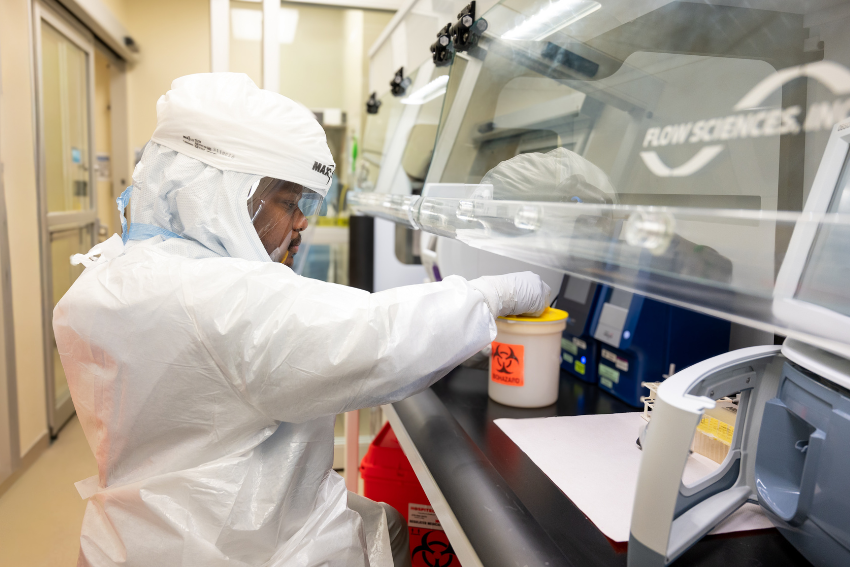
When a patient arrives at a hospital with symptoms consistent with a high-consequence infectious disease (HCID), timely laboratory testing is critical for diagnosis, clinical decision-making, and patient care. However, a new study published in Infection Control & Hospital Epidemiology reveals that many frontline acute care hospitals face significant challenges in safely performing routine laboratory tests for these patients, potentially leading to delays in initial stabilizing care.
Researchers at four Regional Emerging Special Pathogen Treatment Centers (RESPTCs)—NYC Health + Hospitals/Bellevue, Massachusetts General Hospital, Medstar Washington Hospital Center, Johns Hopkins Hospital—and Boston University worked together to survey hospitals across four major metropolitan regions to better understand current laboratory capabilities and barriers related to suspected special pathogen patients.
The manuscript, titled “Assessing Current Capabilities and Barriers to Performing Routine Laboratory Tests on Patients with Suspected High Consequence Infectious Disease at Frontline Acute Care Hospitals,” provides important insights into preparedness gaps that continue to affect patient care and operational response.
Survey Overview
The study surveyed 95 acute care hospitals with emergency departments in Boston, New York City, Baltimore, and Washington, D.C. Participants included leaders from hospital clinical laboratories, emergency departments, and emergency management programs.
Of the 95 eligible hospitals, 50 completed the survey, resulting in a response rate of 53%, which is considered high for an external survey.
What Hospitals Can Test For
Researchers found that several commonly needed tests could be performed on-site at many hospitals when caring for patients with suspected HCIDs:
- Blood gas testing: 70%
- Hemoglobin/hematocrit testing: 68%
- Lactate testing: 68%
While these capabilities were relatively common, several other clinically important laboratory tests were less frequently available:
- Chemistry panel: 64%
- Urinalysis: 60%
- Complete blood count (CBC) with differential: 56%
- Malaria rapid diagnostic test (RDT): 48%
The Gap Between Importance and Capability
One of the most significant findings of the study was the mismatch between the tests clinicians consider most important and the tests hospitals are able to perform.
Survey respondents identified the following tests as essential for clinical care:
- Hemoglobin/hematocrit: 91%
- Chemistry panel: 90%
- CBC with differential and platelet count: 89%
- Malaria RDT: 88%
- Blood gas testing: 88%
Notably, three of these high-priority tests were among the less commonly available laboratory capabilities: chemistry panels, CBCs with differential, and malaria RDTs.
This disconnect highlights a critical preparedness challenge. When hospitals cannot safely perform tests that clinicians rely on to guide treatment decisions, patient care may be delayed at a time when rapid assessment is most important.
Why Malaria Testing Matters
The limited availability of malaria testing was particularly notable. Due to overlap in signs and symptoms, patients initially suspected of having a special pathogen often ultimately receive an alternative diagnosis, including malaria. Rapid malaria testing can help healthcare teams quickly identify the true cause of illness, allowing hospitals to safely de-escalate special pathogen precautions when appropriate and begin targeted treatment sooner. Without access to malaria testing, hospitals may face prolonged isolation procedures, delayed clinical decision-making, and delays in treatment for patients whose illness is unrelated to a high-consequence infectious disease.
Barriers to Routine Testing
Hospitals reported several factors that limit their ability to perform routine laboratory testing on suspected HCID patients, including:
- Concern that processing suspected HCID patient samples may impede ability to perform lab testing for other patients
- Infection prevention and control challenges
- Lack of appropriate laboratory space
- Lack of appropriate equipment
- Funding limitations
These barriers demonstrate that testing gaps are often driven not by a lack of recognition of clinical need, but by operational, infrastructure, and resource constraints.
Potential Solutions
One approach to address these challenges is outlined in a laboratory testing toolkit developed by Massachusetts General Hospital and the Region 1 Regional Emerging Special Pathogens Treatment Center. The toolkit offers an operational model for frontline facilities, with guidance for safely collecting, processing, and testing specimens from patients with suspected viral hemorrhagic fevers. It addresses infection prevention and control, waste management, occupational health, and laboratory workflows. It provides a solution for basic metabolic panel testing and rapid malaria testing within a biosafety cabinet in the hospital core lab.
More recently, an alternative approach was published by a group convened by the Greater New York Hospital Association. It describes point-of-care testing within the patient care isolation room, which avoids the need to transport specimens to the lab and allows all waste to be sequestered in one location. The authors align with the minimum set of routine lab tests recommended by NSPS—electrolytes, hemoglobin/hematocrit, and malaria rapid diagnostic testing—guided by a laboratory risk assessment. Read the point-of-care laboratory testing manuscript.
Hear More: Viral Hemorrhagic Fever Preparedness
Hear directly from the authors behind this research in a recent episode of the Infection Control & Hospital Epidemiology (ICHE) Podcast. Justin Chan, MD, Madeline DiLorenzo, MD, Erica Shenoy, MD, PhD, and Sarah Turbett, MD, discuss their findings and approaches to strengthening routine laboratory testing and preparedness for patients with suspected viral hemorrhagic fevers.
Listen to the episode “Viral Hemorrhagic Fever Preparedness”: SoundCloud | Apple Podcasts | Spotify
Key Takeaways
- A survey of 50 frontline acute care hospitals in Boston, New York City, Baltimore, and Washington, D.C. assessed routine laboratory testing capabilities for patients with suspected HCIDs.
- Blood gas, hemoglobin/hematocrit, and lactate tests were the most commonly available on-site laboratory services.
- Chemistry panels, CBCs with differential, and malaria rapid diagnostic tests were less commonly available capabilities.
- Several of the tests considered most important for clinical care were not widely available, highlighting significant preparedness gaps.
- Limited malaria testing remains a particular concern because many suspected special pathogen patients ultimately are diagnosed with malaria instead.
- Key barriers include safety concerns, infection control requirements, space limitations, and funding constraints.
- NETEC experts have recently published two alternative approaches to enable safe routine lab testing when evaluating a patient with suspected viral hemorrhagic fever. Implementing these strategies will help strengthen frontline hospital special pathogen preparedness.
Learn more:
Assessing Current Capabilities and Barriers to Performing Routine Laboratory Tests on Patients with Suspected High Consequence Infectious Disease at Frontline Acute Care Hospitals in Infection Control & Hospital Epidemiology
Enabling laboratory readiness and preparedness for the evaluation of suspected viral hemorrhagic fevers: development of a laboratory toolkit
Point-of-care routine laboratory testing for patients with suspected viral hemorrhagic fevers
Infection Control & Hospital Epidemiology (ICHE) Podcast: “Viral Hemorrhagic Fever Preparedness” on SoundCloud | Apple Podcasts | Spotify