Pediatric Special Pathogen Preparedness: Beyond Adult Protocols
Share this article
Children aren’t just small adults. Preparing to care for pediatric patients with high-consequence infectious diseases requires attention to their unique clinical needs, their families, and the challenges of providing care in isolation.
A child arrives at an emergency department with fever, vomiting, and diarrhea. These are symptoms healthcare workers see every day. But what if the child recently traveled to an area experiencing an Ebola outbreak? What if a parent is also sick? And what if the facility isn’t equipped to care for a pediatric patient with a suspected high-consequence infectious disease?
These are some of the challenges explored in a recent episode of NETEC’s Transmission Interrupted podcast, Young Patients, Big Challenges: Pediatric Preparedness for High-Consequence Infectious Diseases.
Host Jill Morgan, RN, speaks with four pediatric preparedness experts:
- Kari Simonsen, MD, University of Nebraska Medical Center
- Pooja Nawathe, MD, Cedars-Sinai Medical Center and Cedars-Sinai Guerin Children’s
- Tress Goodwin, MD, Children’s National Hospital
- Erika Cheung, MSN, RN, CPN, Children’s Hospital Los Angeles
Their conversation examines lessons from Ebola outbreaks, gaps in pediatric preparedness, and practical steps healthcare facilities can take to better prepare for young patients with suspected high-consequence infectious diseases.
Recognizing a Potential Case Isn’t Always Easy
The Ebola outbreak in the Democratic Republic of the Congo discussed in the episode highlights the particular risks facing children, especially those younger than five. Limited access to healthcare, malnutrition, and other underlying health challenges can make treatment especially difficult.
Early recognition is another challenge.
Fever, vomiting, and diarrhea are common childhood symptoms. They’re also possible early signs of viral hemorrhagic fevers, including Ebola. Young children may be unable to describe their symptoms or provide important information about recent travel or potential exposures, making information from parents and caregivers especially important.
Travel and exposure screening should be part of pediatric triage, and healthcare workers should be familiar with the Identify, Isolate, and Inform framework.
Infection prevention also begins at triage. Children presenting with vomiting, diarrhea, or other potentially infectious symptoms should be assessed for appropriate precautions, even before their travel or exposure history is fully understood. These measures help protect healthcare workers and other patients from both common infections and potential high-consequence pathogens.
These skills matter beyond specialized treatment centers. Community hospitals, critical access hospitals, and other frontline facilities may be the first to encounter a child with a suspected special pathogen infection.
Pediatric Clinical Care Requires Special Considerations
Children have less physiologic reserve than adults and can deteriorate rapidly when experiencing significant dehydration and electrolyte abnormalities.
Managing these complications requires careful monitoring of fluid losses, which can be challenging when patients have substantial vomiting or diarrhea. Practical approaches include weighing diapers, measuring urine output, and using bedside ultrasound to support fluid assessment.
Laboratory testing, vascular access, and the availability of pediatric-appropriate medical countermeasures present additional challenges. Maintaining IV access in a dehydrated child can be difficult, particularly when healthcare workers are wearing specialized PPE.
Children have also been underrepresented in some medical countermeasure trials, creating gaps in pediatric treatment options. Including pediatric patients in research and treatment development is important to ensure that appropriate therapies are available for children of different ages.
Recovery Doesn’t End When the Infection Clears
For children who survive Ebola, recovery can be a long process.
Pediatric survivors may experience lasting complications, including joint and muscle pain, vision problems, hearing loss, headaches, and other neurological symptoms. Psychological and behavioral effects can also persist, particularly for children who have experienced severe illness, isolation, or the loss of family members.
Some symptoms improve over time, while others may continue for months or years. Long-term follow-up is important for identifying and addressing these complications and supporting a child’s physical, emotional, and developmental recovery.
Plan for the Family, Not Just the Child
Caring for a pediatric patient with a high-consequence infectious disease also means considering the needs of the entire family.
What happens when a sick parent arrives with an exposed child? Should they remain together or be separated to reduce the risk of transmission?
What if a healthy parent wants to stay with their sick child during isolation? Can the caregiver remain in the room? Would they need PPE and training?
There isn’t one answer that works for every facility. But these are decisions healthcare teams should consider before a patient arrives.
Facilities need clear plans for caregiver presence, family communication, and the management of potentially exposed family members. Social workers, child life specialists, and other support services can play important roles, even when they aren’t physically present in the isolation room.
Explaining isolation procedures to patients and families can help reduce anxiety, prevent misunderstandings, and avoid unintentionally stigmatizing patients because of their travel history or country of origin.
A Calm Child Is a Safer Patient
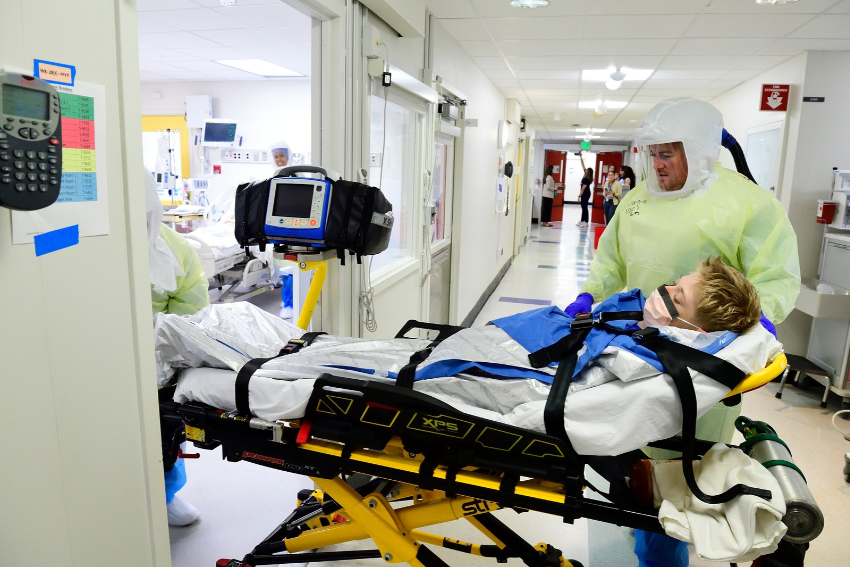
Being transported or treated by healthcare workers wearing full PPE can be frightening for a child. Separation from family, unfamiliar surroundings, and medical procedures can add to that anxiety.
And those emotional needs have implications for safety.
As Tress Goodwin, MD, explains during the podcast, “a child that’s calm and that is cooperative is safer for everyone.”
Following lessons learned during a national patient transport exercise, her team incorporated what they call recalibration moments into pediatric response protocols.
After a transfer or other major action, healthcare workers pause to check in with the child, assess their emotional state, and help them feel comfortable before continuing care.
Child life specialists are particularly valuable in these situations. Through virtual communication, they can help explain procedures, address fears, and provide reassurance without requiring additional personnel to enter the isolation room.
These small adjustments can make a meaningful difference for patients and healthcare teams alike.
Know Your Pediatric Transfer Plan
Not every healthcare facility has the resources to provide specialized pediatric care for a patient with a high-consequence infectious disease.
Even facilities that are prepared to care for adult special pathogen patients may have limitations when it comes to children.
That’s why pediatric transfer planning is an important part of preparedness.
Healthcare facilities should consider several questions:
- Which nearby facilities can provide specialized pediatric care for patients with suspected high-consequence infectious diseases?
- Is the usual pediatric referral hospital also the appropriate destination for a special pathogen patient?
- Are EMS partners equipped and trained to transport pediatric patients safely?
- Who should be contacted for clinical consultation, public health guidance, and transfer coordination?
Facilities should establish these relationships and practice their procedures before an emergency.
Training and exercises should address pediatric-specific considerations, including equipment, transport restraints, PPE, and the psychosocial needs of young patients. Specialized treatment centers can also help strengthen readiness by sharing their expertise with frontline facilities throughout their regions.
The goal is to make pediatric considerations a routine part of special pathogen preparedness—not something facilities have to figure out when a child arrives.
Listen to the Full Conversation
Hear more about pediatric special pathogen preparedness in Young Patients, Big Challenges: Pediatric Preparedness for High-Consequence Infectious Diseases, an episode of NETEC’s Transmission Interrupted podcast.