Global Rounds: Response to the 2022 Mpox Outbreak
Share this article
Renaming to mpox
NETEC is in the process of updating its web pages with the term “mpox” to reduce stigma and other issues associated with prior terminology. This change is aligned with the World Health Organization decision.
As part of NETEC’s International Partnerships and Programs initiative, the second Global Rounds was held in September 2022 and focused on the current multi-country mpox outbreak. Speakers at the virtual event included Dr. Krutika Kuppalli from the World Health Organization (WHO), Dr. Michaela Niebank of The Robert Koch Institute in Germany, Dr. Jake Dunning of Royal Free Hospital in the United Kingdom, and Dr. Darius Beh from Singapore’s National Centre for Infectious Diseases. The panelists provided updates on the current state of the mpox outbreak in their geographic regions, reviewed the public health response to the outbreak, and shared their unique clinical experiences. This Global Rounds provided the global community with a better understanding of the present mpox outbreak and advanced preparedness and response capabilities for future outbreaks.
Epidemiological Overview
Mpox is endemic in central and western Africa and, historically, cases elsewhere have either been imported from countries where mpox is endemic or contacts with documented epidemiological links to imported cases. In May 2022, mpox was detected in several non-endemic countries; it would soon be recognized as a global outbreak. To date, 79,151 individuals in 110 countries have been affected, the majority of cases in gay, bisexual, and other men who have sex with men (MSM).
- Dr. Kuppalli from the WHO provided a global perspective on the state of the mpox outbreak at the time of the Global Rounds.
- The Global Rounds panelists from high consequence infectious disease (HCID) treatment centers in Germany, the United Kingdom, and Singapore shared epidemiological overviews of the outbreak for their respective countries; at the time of the presentation, each of the countries was experiencing a declining case count. Since the presentation, each country represented has demonstrated a continued decline or stagnation of new cases, with no significant increases.
Public Health Response to Mpox
Outbreaks of mpox in non-endemic areas are often limited in nature. As seen during the current outbreak, global response operations typically include isolation of confirmed or suspected cases, communication with and isolation of case contacts, additional risk assessment and management (especially for those deemed as high-risk), prophylactic vaccination, prevention of any further zoonotic transmission, and communication with partners and stakeholders as necessary.
- Due to the multi-country nature of the outbreak, the WHO’s “Interim Rapid Response Guidance for the Clinical Management and Infection Prevention and Control for Mpox” was established in June 2022 and contains 36 recommendations with full guidelines for the global care and management of patients with mpox. Targeted to clinicians, health care workers, infection prevention practitioners, and health facility managers, the WHO guidelines cover the clinical management and infection prevention and control (IPC) of mpox.
- The HCID treatment centers represented on the call employed many of the same strategies for disseminating information to at-risk populations and health care networks.
- Coordinated regular meetings with stakeholders, including physicians, health care authorities, epidemiologists, professional medical societies, etc. to discuss case reports and share advice on patient management, diagnosis, and treatment.
- Offered webinars for mpox updates and information sharing
- Discussed ongoing situations and case reports with medical personnel to determine indication for treatment with Tecovirimat
- Performed consultations with in-country and out-of-country entities on various mpox topics of interest
- Coordinated regular meetings with stakeholders, including physicians, health care authorities, epidemiologists, professional medical societies, etc. to discuss case reports and share advice on patient management, diagnosis, and treatment.
- ACAM2000 (Imvamune) and Jynneos (Imvanex) vaccines have both been used at different levels as needed, primarily depending on availability. These vaccines were most commonly used for post-exposure prophylaxis (PEP) for high-risk contacts and individuals as well as those with a high risk for occupational exposures (i.e., health care workers).
Clinical Management and Treatment of Mpox
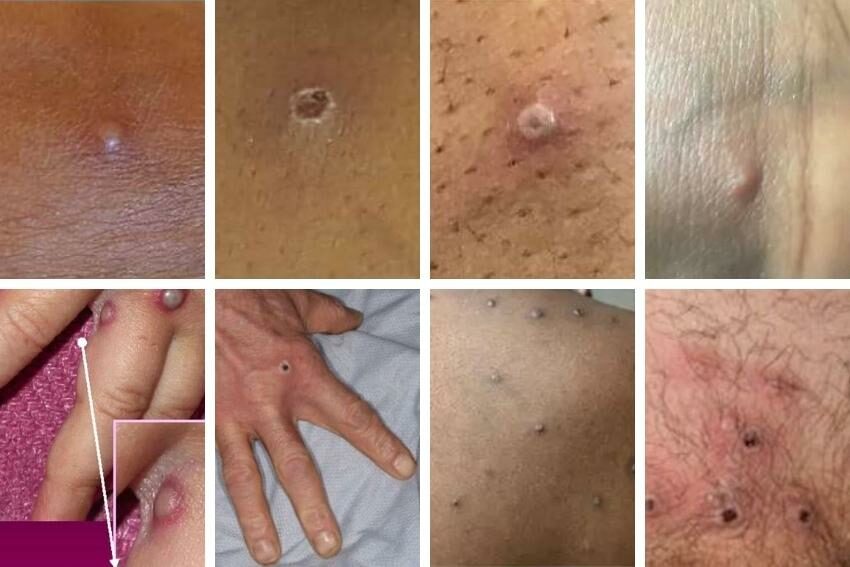
- Global WHO data show that the most common symptoms of mpox infection are fever, lesions/rash, and lymphadenopathy. Genital rash appears to be more common in the current outbreak; otherwise, symptoms were similar to those seen in previous outbreaks and reported in research literature.
- Clinicians are encouraged to use the WHO Global Clinical Platform for Mpox to collect anonymized clinical data for those with confirmed or suspected mpox. For questions regarding the tool, contact monkeypox_clinicaldataplatform@who.int.
The infectious disease physicians presenting at the Global Rounds from the United Kingdom, Germany, and Singapore discussed clinical management and treatment for mpox.
- Previous clinical experiences with mpox in the United Kingdom and Singapore likely prepared these centers for the current outbreak.
- The clinicians from the UK, Germany, and Singapore shared their active infection prevention and control (IPC) measures and recommendations for mpox, all of which were similar.
- None of the treatment centers activated their high-level isolation units during the current mpox outbreak.
- Mpox patients in all three facilities that required clinical treatment were isolated in negative-pressure isolation rooms or rooms otherwise prepared for airborne infectious diseases.
- The Global Rounds presenters noted that their facilities required PPE ensembles that provided total body coverage for those with direct patient contact, including full-length gowns, gloves, eye protection, N-95 respirators, and separate boots.
- Additional aerosol/respiratory protections were also recommended, which was a need highlighted in a recent study from Gould et al. in 2022.
- Decontamination methods and waste removal, specifically for patient rooms and other hospital settings, were similar to what is commonly used for HCIDs. See the CDC Guidance (CDC, https://www.cdc.gov/poxvirus/monkeypox/clinicians/infection-control-healthcare.html, Accessed 12/7/2022) and ECDC Guidance on decontamination methods and waste removal.
- Decontamination methods—for patient belongings—included disposal (if possible), hydrogen peroxide vapor disinfection, or ultraviolet (UV-C) disinfection.
- When considering classification of mpox as a high consequence infectious disease, upon review of morbidity and mortality data, the United Kingdom has removed mpox clade IIb (B.1 lineage) (the clade causing the current global outbreak) from its list of HCIDs.
- Tecovirimat (TPOXX), an approved treatment for smallpox, can be used for compassionate use purposes for other orthopoxviruses, including mpox.
- CDC considerations (CDC, https://www.cdc.gov/poxvirus/monkeypox/clinicians/Tecovirimat.html#:~:text=People%20with%20a%20condition%20affecting,or%20Darier%20disease%20(keratosis%20follicularis, Accessed 12/7/2022) provide insight on the compassionate use of TPOXX and similar considerations appear to be used globally.
- Globally, Tecovirimat doses are limited, which raises the importance of understanding any specific clinical indications or requirements for its use.
- Among the three clinical centers represented on the call, common indications for tecovirimat use were critical illness, immunosuppressed status, widely disseminated infection, risk of loss of function due to mpox scars or sores (urinary obstruction, loss of eyesight, respiratory track involvement, etc.) or similar. However, indications for use varied by country, medical center, availability, and more.
Universal, Ongoing Challenges
- The majority of cases of the current mpox outbreak have been found in men who have sex with men (MSM). Communications methods to directly reach populations at increased risk and avoid stigmatization are critical (CDC, https://www.cdc.gov/poxvirus/monkeypox/resources/reducing-stigma.html, Accessed 12/7/2022).
- Precise, directed communication about PEP and Pre-Exposure Prophylaxis (PrEP), especially to MSM populations, through means other than intermediaries like LGBTQI+ community networks, is difficult in complex health care communications systems.
- Educating health care workers to recognize atypical mpox presentations continues to be a need, as confirmed or suspected cases continue to arrive at their institutions.
- Similarly, uncertainty remains regarding mpox impacts on children, simply due to a lack of data. Specific inquiries include mpox effects on children broadly but also implications and handling of severe mpox cases in pediatric clinical settings (CDC, https://www.cdc.gov/poxvirus/monkeypox/clinicians/pediatric.html, Accessed 12/7/2022).
- The limited global supply of tecovirimat has made access understandably difficult. Vaccine supplies are also relatively low.
- EMS/Transportation capacity to take infectious patients home when they could recover at home was sometimes stretched thin.
- Facilities often limited capacity for HCID inpatients.
About the Author
Joe Lukowski, BS, is a graduate student in the MPH-Epidemiology program at the University of Nebraska Medical Center. He is interested in bioterrorism, emerging infectious diseases, high-consequence infectious diseases, high-level isolation, infection prevention and control, and outbreak preparedness and response. Joe is also currently working at NETEC as a student worker.