Mpox in 2024: 10 Takeaways for Frontline Health Care Staff
Share this article
Mpox has recently resurfaced on the global health radar, posing significant challenges for public health strategies and clinical management. In the Democratic Republic of the Congo (DRC), a new variant of clade I monkeypox virus (MPXV) has emerged, linked to human-to-human transmission. It is uncertain whether this variant is more transmissible or causes more severe disease than other strains, but the outbreak poses a risk for regional and international spread. Simultaneously, the global outbreak of mpox caused by clade IIb MPXV, which began in 2022, is ongoing, including in the United States.
A recent webinar, “Mpox in 2024: Updates and Considerations for Frontline Staff,” provided an overview of the current landscape of mpox, clinical management guidance, and emerging challenges associated with this infectious disease. Here are the key takeaways highlighting the global and national impact, current activity trends, clinical management strategies, and vaccination protocols for mpox.
- Global and United States Overview
- More than 97,000 confirmed cases of mpox across 118 countries, with 184 confirmed deaths globally.
- Over 32,000 cases in the U.S. with 58 associated deaths.
- Majority of cases in the U.S. (CDC, https://www.cdc.gov/mpox/data-research/cases/, Accessed 2025) involve middle-aged men, primarily linked to sexual contact; disproportionate impact on Hispanic, Latino, and African American populations.
- Although vaccination provides good protection, breakthrough infections in fully vaccinated people have occurred, albeit with less severe symptoms.
- 2024 Activity in the United States
- More than 1,100 cases have been reported as of June 8, 2024 (CDC, https://wonder.cdc.gov/nndss/static/2024/25/2024-25-table968.html, Accessed 7/11/2024), showing an increase compared to 2023.
- Breakthrough infections in fully vaccinated individuals have occurred, associated with high-risk activities. These breakthrough infections have not been associated with changes in the virus or vaccine abnormalities.
- Clade 1 Outbreak in the Democratic Republic of Congo
- More than 19,000 suspected clade I mpox cases with 975 deaths reported in DRC since January 2023.
- Transmission through zoonotic, household, and sexual contact.
- Significant impact on children, with 67% of cases and 78% of deaths in children aged 15 or younger.
- Multiple introductions from animal hosts identified.
- U.S. Surveillance for Clade 1
- No clade 1 cases identified in the U.S. to date.
- Surveillance measures include specimen testing, wastewater surveillance, and airport screening.
- Travel screening is crucial for identifying potential cases from outbreak zones.
- Clinical Presentation and Management
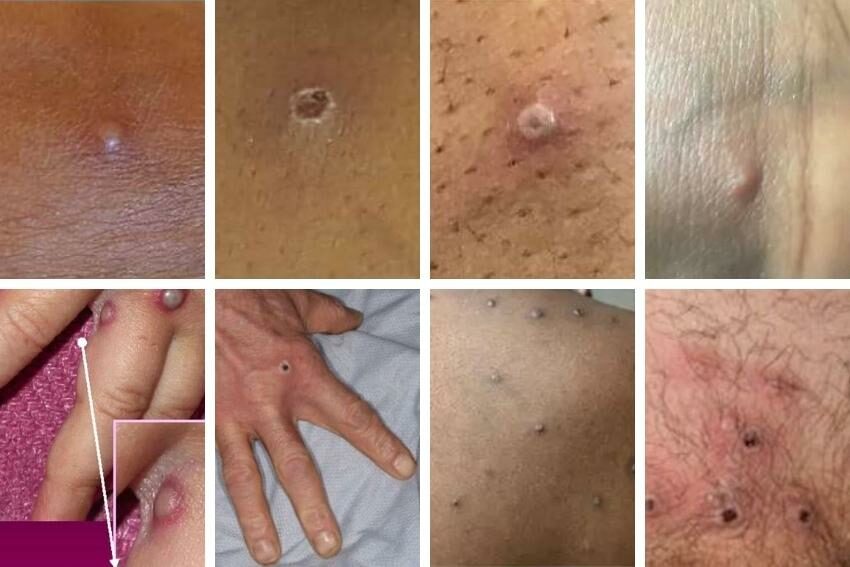
- The incubation period ranges from 3 to 17 days. Symptoms may begin with a prodrome of fever, malaise, headache, and lymphadenopathy in some patients that last for 1 – 4 days. A rash consisting of single or multiple lesions, localized or diffuse, will then develop that may last 2 to 4 weeks. The patient is not infectious once the scabs fall off and a fresh layer of intact skin has formed. Learn more (CDC, https://www.cdc.gov/mpox/hcp/clinical-signs/, Accessed 2025).
- Severe cases predominantly involve immunocompromised individuals, especially those with HIV and low CD4 counts.
- Transmission mainly through sexual contact; lower attack rate via non-sexual routes.
- Treatment Recommendations and Patient Care
- High co-occurrence with other sexually transmitted infections, underscoring need for comprehensive screening.
- There is no FDA-approved mpox treatment, however, early initiation of Tecovirimat (TPOXX) (CDC, https://www.cdc.gov/mpox/hcp/clinical-care/tecovirimat.html, Accessed 2025) is recommended for severe cases or high-risk individuals.
- Follow the “Identify, Isolate, Inform” approach when managing mpox cases in clinical settings.
- Molecular Testing and Safety Protocols
- PCR is the fastest and only recommended method for detecting mpox.
- Specimen collection involves at least two swabs from different locations, placed in two separate tubes of viral transport media.
- Clade 1 and clade 2 diagnostic samples are classified as Category B for shipping; clade 1 cultures remain Category A.
- Follow laboratory safety protocols when handling high-risk specimens, including wearing appropriate PPE, using a biosafety cabinet, and avoiding aerosolizing procedures. Do not perform clade 1 cultures in clinical labs.
- Waste Management
- Two distinct clades of mpox: clade 1 and clade 2.
- Health care-generated waste contaminated with clade 2, including soiled PPE, patient dressings, and diagnostic specimens (excluding viral cultures), can be managed similarly to other infectious waste.
- Clade 1 viral cultures must be handled as Category A hazardous materials.
- Vaccination and Prevention
- The JYNNEOS vaccine (CDC, https://www.cdc.gov/monkeypox/vaccines/, Accessed 2025) is administered in a two-dose regimen, given approximately 28 days apart, for at-risk populations over 18 years old.
- Health disparities exist in vaccine distribution, with higher distribution among Caucasians despite higher contraction rates among Hispanic, Latino, and African American populations.
- Post-exposure prophylaxis most effective within four days of exposure; pre-exposure vaccination recommended for high-risk individuals.
- Pregnancy-Specific Considerations
- Limited data on vaccine safety in pregnancy; JYNNEOS vaccine is recommended, not ACAM.
- Virus transmission during pregnancy is possible; unclear if cesarean section reduces transmission.
- Post-delivery, consider isolating the neonate from the birthing parent if genital lesions are present. Breastfeeding should be done with caution.
- TPOXX is recommended for treatment during pregnancy although safety data is limited to animal models; TPOXX is found in breast milk. Separate treatment is necessary for the neonate if the mother is being treated with TPOXX.
Resources for Health Care Personnel
-
The Department of Transportation updated the shipping classification for mpox diagnostic samples. Diagnostic samples for both Clade I and Clade II are currently classified as Category B.
-
Initially, vaccines were administered subcutaneously but were changed to intradermal administration to increase the vaccine supply and distribution capacity.
-
Hazardous materials regulations were updated in April 2024, providing guidelines on classification, packaging, shipping names, inactivation methods, and disinfectants.
-
Disinfectants with an emerging pathogen label claim listed on the U.S. Environmental Protection Agency’s List Q are recommended to disinfect for mpox.
About the Experts
This blog post is based on the webinar presentation provided by the following individuals.
Dr. Jonathan Grein, MD, is an infectious disease physician and Director of Hospital Epidemiology at Cedars-Sinai Medical Center. He is an Associate Clinical Professor with the David Geffen School of Medicine at UCLA, and co-chair of the Infection Prevention and Control Committee and Antimicrobial Stewardship Committee. Dr. Grein oversees the Special Pathogens program at Cedars-Sinai Medical Center and is the co-Principal Investigator for the RESPTC. He also attends the clinical ID teaching service, and through his involvement in the Special Pathogens program was among the first physicians to use tecovirimat for Mpox.
Vicki Herrera, MS, has worked in the clinical laboratory for the past 18 years. She worked in the Nebraska Public Health Laboratory for 9 years as a Supervisor in the Molecular, Microbiology and LRN sections. She is currently working as a Research Coordinator at the University of Nebraska Medical Center in the field of infectious diseases and bioaerosols. She has supported the Nebraska Biocontainment Unit for the past 13 years and currently supports both NETEC and the Nebraska Biocontainment Unit Laboratory by providing education and training to laboratory staff. In addition, she is the Alternate Responsible Official for the University of Nebraska Medical Center’s SelectAgent program.
Dr. John Horton, MD, is a practicing General OB/Gyn at Emory Healthcare, the Vice Chair of Clinical Affairs, and Associate Professor for the Department of Gynecology and Obstetrics. Dr. Horton joined NETEC in 2015 providing obstetric perspectives and aiding in clinical protocol management for the pregnant population.
Kari L. Love, RN MS CIC FAPIC, has worked in healthcare for over 30 years as a Registered Nurse and discovered her passion for infection prevention and epidemiology 20 years ago. She joined Emory Healthcare in April 2019 as Corporate Director of Infection Prevention. Kari has published and co-authored books and numerous articles in peer-reviewed journals and remains involved in the day-to-day challenges of infection prevention. She received the Daisy Leadership Award for her contributions at Emory and has received recognition for her leadership and clinical achievements.
Dr. Anna Quay Yaffee, MD, MPH, is an Associate Professor of EmergencyMedicine, practicing clinically at Grady Memorial and Emory University hospitals. She serves as the Emergency Medicine liaison to the Emory SeriousCommunicable Diseases Unit and assists with frontline serious communicable disease preparedness for the Emory Healthcare system as well as nationally through NETEC.
Additional Support

Get Expert Assistance
Ask a NETEC expert a question or request free services for your facility.
Find Resources
Explore special pathogen resources created and curated by NETEC experts.