Remembering Dr. Bruce Ribner: A Legacy of Leadership, Preparedness, and Compassion

Share this article
The NETEC community joins colleagues around the world in mourning the loss of Bruce S. Ribner, MD, MPH—a visionary physician, hospital epidemiologist, mentor, and one of the founding leaders of the National Emerging Special Pathogens Training and Education Center (NETEC).
For more than four decades, Dr. Ribner devoted his career to improving the safety of patients and healthcare workers through excellence in infectious diseases, hospital epidemiology, and preparedness. His work fundamentally changed how hospitals prepare for and respond to high-consequence infectious diseases, leaving a legacy that continues to protect communities across the United States and around the world.
After joining Emory University in 2000, Dr. Ribner envisioned a healthcare system that would be prepared—not reactive—when confronted with highly infectious diseases. He conceived, designed, and became the Medical Director of Emory University Hospital’s Serious Communicable Diseases Unit (SCDU), developing the policies, protocols, and multidisciplinary approach that would later serve as a national model for special pathogen care.
That vision became reality in 2014, when Emory University Hospital became the first hospital in the United States to successfully care for patients with Ebola virus disease during the West Africa epidemic. Under Dr. Ribner’s leadership, the SCDU safely treated four patients—all of whom survived—demonstrating that with preparation, training, and teamwork, healthcare organizations could safely care for patients with the world’s most dangerous infectious diseases. The experience reshaped national preparedness efforts and became a defining moment in the evolution of special pathogen readiness. In recognition of those extraordinary efforts, Dr. Ribner and his team were among the Ebola responders collectively named Time magazine’s 2014 Person of the Year.
In the years that followed, Dr. Ribner helped ensure those lessons would extend far beyond a single institution. As Emory University’s Principal Investigator for the ASPR and CDC cooperative agreement establishing NETEC, he worked alongside leaders from the University of Nebraska Medical Center and New York City Health + Hospitals/Bellevue to launch a national collaboration dedicated to strengthening healthcare preparedness for special pathogens.
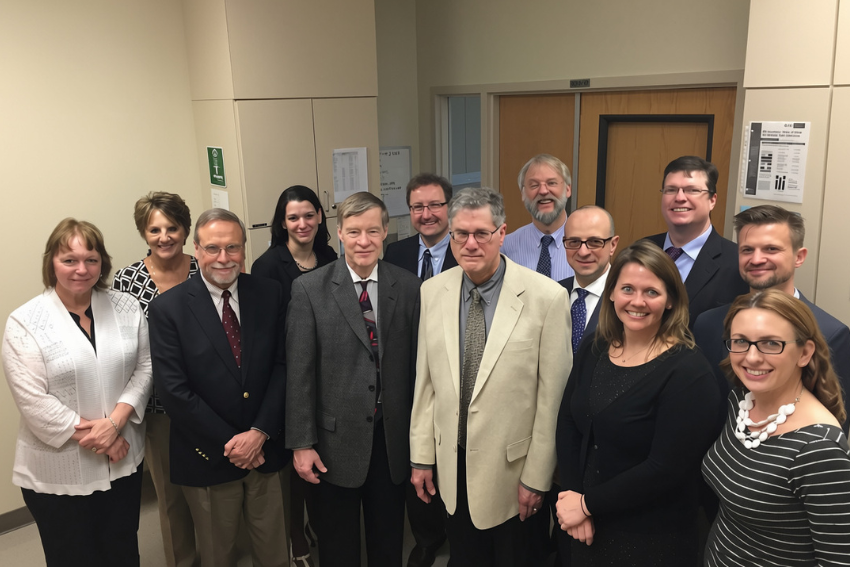
Dr. Ribner understood that preparedness is not built during a crisis—it is built every day through planning, training, collaboration, and a commitment to continuous improvement. That philosophy became foundational to NETEC and remains central to the National Special Pathogen System.
“Bruce was the pioneer for our national special pathogens response,” said Vikramjit Mukherjee, MD, NETEC Co-Principal Investigator at NYC Health + Hospitals/Bellevue. “Through our shared work at NETEC, he instilled a culture of rigorous preparedness and uncompromising team safety. He taught us that caring for patients with high-consequence diseases isn’t about working in isolation—it’s about building an interconnected network of expertise. We are vastly better prepared today because of his vision and steady leadership.”
His influence extended well beyond the programs he helped establish. An accomplished infectious diseases physician, hospital epidemiologist, educator, and researcher, Dr. Ribner authored dozens of peer-reviewed publications, led numerous federal research initiatives, and trained generations of physicians, nurses, epidemiologists, and healthcare leaders. His contributions continue to shape the field of special pathogen preparedness through the programs he helped build and the professionals who carry that work forward.
Even after retiring from Emory University in 2021, Dr. Ribner’s impact continued to be felt through the programs he built, the partnerships he fostered, and the healthcare professionals he inspired. Today, every hospital that strengthens its preparedness, every healthcare worker who trains to safely care for patients with high-consequence infectious diseases, and every collaborative effort to improve readiness reflects the enduring influence of his life’s work.
Dr. Ribner’s legacy lives on not only in the institutions he helped create, but in the countless people he taught, mentored, and inspired. His vision transformed preparedness from an aspiration into a national capability.
We extend our deepest condolences to Dr. Ribner’s wife, Barbara, his children, grandchildren, colleagues, friends, and the entire Emory community.
Thank you, Dr. Ribner, for your extraordinary leadership, your unwavering commitment to preparedness, and your lasting contributions to protecting patients, healthcare workers, and communities around the world. Your legacy will continue to guide our work for generations to come.