NETEC News & Blog
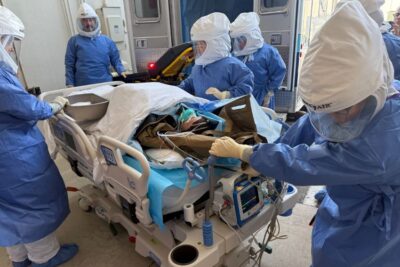
Strengthening the Response: A Framework for High-Consequence Infectious Disease Preparedness
A new open-access article in Emerging Infectious Diseases outlines a comprehensive framework for high-consequence infectious disease (HCID) preparedness and response.
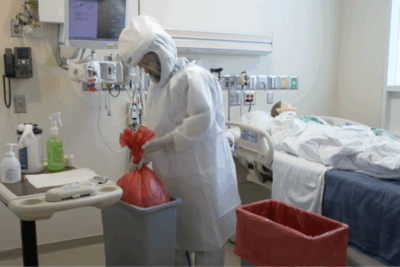
How to Package Category A Waste: A Visual Guide for Healthcare Facilities
A new NETEC video breaks down the step-by-step process of using vendor-supplied or hospital-acquired Category A waste packaging for off-site inactivation or destruction.

Home-Based Strategies for Managing High-Consequence Infectious Diseases
A recent NETEC webinar explored how home testing and remote patient monitoring (RPM) can serve as safe, scalable strategies—not only reducing the need for costly and resource-intensive biocontainment unit (BCU) activation, but also helping hospitals manage patient surges more effectively during high-consequence infectious disease (HCID) events.

Nipah Virus: What Clinicians Need to Know
A new open-access article in the International Journal of Emergency Medicine offers a concise overview of Nipah virus for frontline clinicians—covering signs and symptoms, diagnostics, infection control, and emerging treatment and vaccine options. The article was written by members of NETEC’s Special Pathogens Research Network.

Know Your PPE: The Must-Have Resource for Healthcare Professionals Caring for Special Pathogen Patients
The “Know Your PPE” guide is a comprehensive, easy-to-navigate resource created to support healthcare professionals in understanding and selecting the appropriate PPE for special pathogen scenarios.

NIOSH Voluntarily Rescinds Approvals for Select Kimberly-Clark and ivWatch Respirators
NIOSH has rescinded approval for multiple respirator models at the request of manufacturers, including popular duckbill-style respirators from Kimberly-Clark and one model from ivWatch. Learn which respirators are affected and what this means for workplace safety compliance.
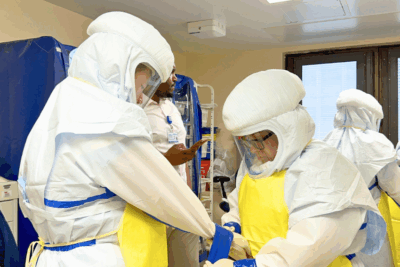
Readiness in Real Life: Inside Bellevue’s No-Notice Drill
A new manuscript by the team at NYC Health + Hospitals/Bellevue details how a no-notice drill was conducted to simulate the early phases of a special pathogen response—and why this kind of exercise is essential for maintaining a true state of readiness.

Drills vs. Exercises: Why Both Are Critical in Special Pathogens Preparedness
Explore the difference between drills and exercises—and why both are critical for healthcare readiness, especially when preparing for high-consequence infectious diseases like Ebola, Marburg, or Lassa fever.

Tranquil Passport: Testing the Nation’s Special Pathogen Readiness Ahead of the FIFA World Cup
Last week’s Tranquil Passport exercise, led by the U.S. Department of Health and Human Services’ Administration for Strategic Preparedness and Response (ASPR), tested a coordinated national response to an HCID scenario—putting the new Portable Biocontainment Unit (PBCU) to the test.
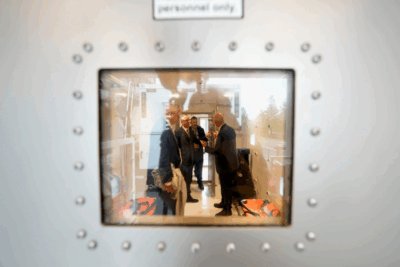
PRESS RELEASE: New Federal Portable Biocontainment Unit (PBCU) Put to the Test in National Health Security Exercise Ahead of FIFA World Cup 2026
The National Emerging Special Pathogens Training and Education Center (NETEC) is proud to support the first operational deployment of the U.S. Department of Health and Human Services’ (HHS) new Portable Biocontainment Unit (PBCU)—a pivotal component of Tranquil Passport, the largest full-scale exercise (FSE) of its kind in HHS history.